


The UAE wage protection system updates for 2026 are simple to state but costly to miss. Under Ministerial Resolution No. 340 of 2026, wages for the previous month are due on the first day of each month. Also, the old grace period is gone. I look at these rules from the finance side, so this page covers what changed, who it covers, the penalty days and what to do before your next payroll.
Key takeaways
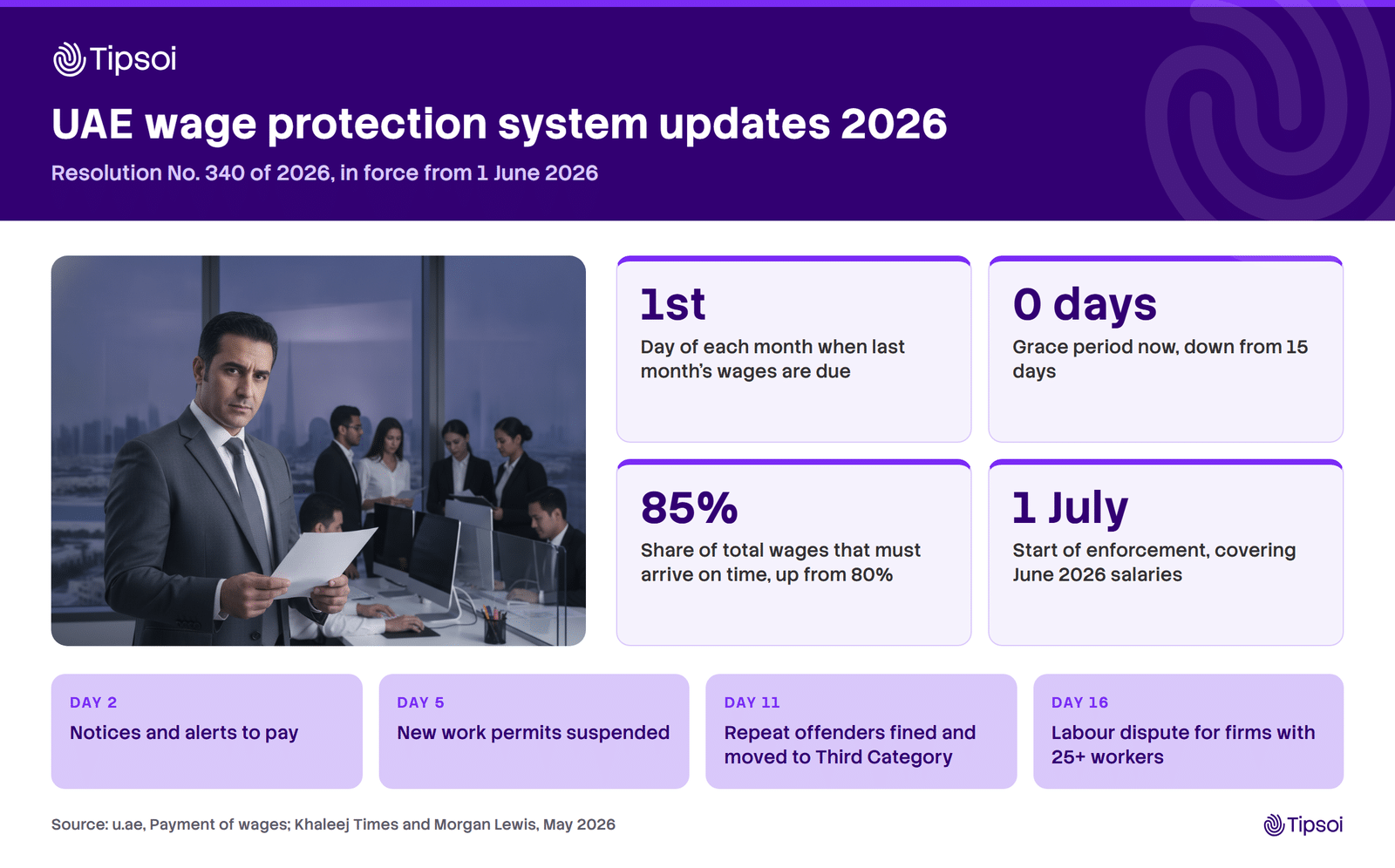
- The UAE wage protection system updates took effect on 1 June 2026, and enforcement began on 1 July with June salaries.
- Wages for the previous month are now due on the first day of each month, with no 15-day grace period.
- A company counts as compliant if at least 85% of total wages arrive on time, up from 80%.
- Warnings start on day 2, work permits stop on day 5, and repeat offenders are fined from day 11.
What changed
Three things changed at once: the due date, the grace period and the threshold. According to the UAE government portal, wages for the previous month are now due on the first day of each Gregorian month. The resolution came into force on 1 June 2026 and repealed Resolution No. 598 of 2022, as MIO & Partners noted on Mondaq in 2026.
| Rule | Before June 2026 | From June 2026 |
|---|---|---|
| Due date | Set by each employment contract. | First day of each Gregorian month. |
| Grace period | 15 days. | None. |
| Compliance threshold | 80%. | At least 85% of total wages. |
Three reports back up those rows.
- Khaleej Times reported in May 2026 that the resolution ends the 15-day grace period.
- Morgan Lewis noted in May 2026 that the 85% threshold replaces the old 80% one.
- MOHRE said in June 2026 that enforcement would begin on 1 July, covering June salaries.
Who it covers
Under Resolution No. 340 of 2026, the rules apply to every establishment registered with MOHRE. In practice, these companies pay wages through a bank, exchange house or financial institution authorised by the Central Bank. The portal lists some exceptions, such as seafarers, workers on unpaid leave and short mission permits, and employers like banks and houses of worship. So unless your business is on that list, the new payday applies to you.
Penalty timeline
Under the UAE wage protection system updates, penalties follow a set calendar from the due date. At first, you get monitoring and warnings. After that, the steps get heavier. Some depend on repeat violations or on how many workers you employ.

| Day after due date | What happens |
|---|---|
| Due date | Electronic monitoring starts. |
| Day 2 onwards | Notifications and alerts to pay. |
| Day 5 | New work permits are suspended, with a warning to the owner. |
| Day 11 | For a repeat violation within six months, an administrative fine and reclassification to the Third Category. |
| Day 16 | For 25 or more workers, an individual or collective labour dispute is registered automatically. |
| Day 21 | An order to pay wages, asset attachment and a travel ban on the person in charge. Firms with 50 or more workers that repeat the violation are referred to the Public Prosecution. |
The fine amount comes from Cabinet Resolution No. 21 of 2020, which sets AED 1,000 for each worker not paid through WPS, up to AED 20,000. For many employers, though, losing new work permits from day 5 hurts more than the fine. After all, it’s the step that stops hiring.
What to do now
The fix is mostly about timing. That’s because your agent needs both the salary file and the funds before it can pay. So the real deadline under the UAE wage protection system updates sits a working day or two before the first.
- Move your attendance and overtime cut-off earlier, so payroll is calculated before the last week of the month.
- Fund your agent account and send the salary file at least one working day before the due date.
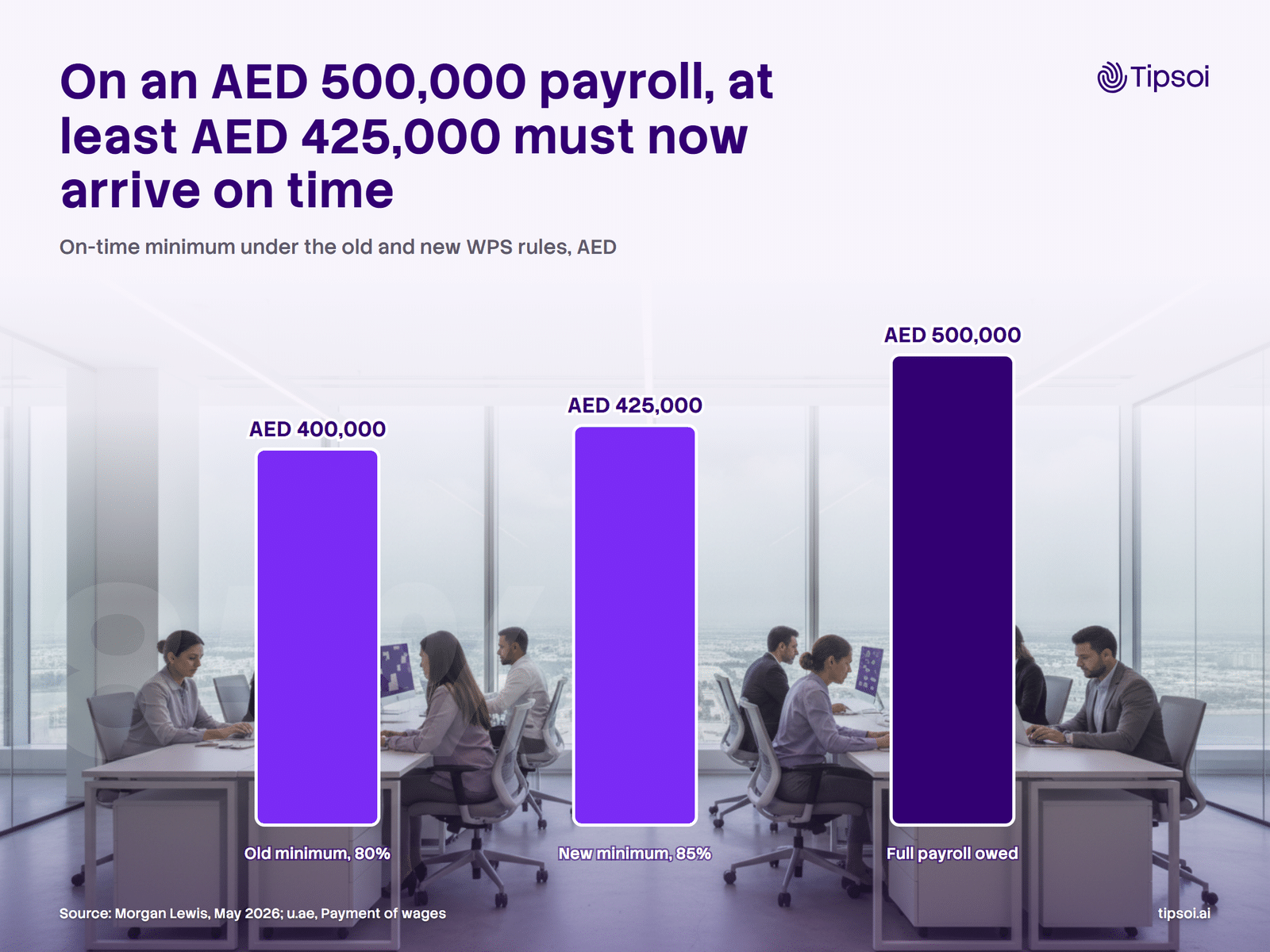
- Check the 85% maths on every run. For example, an AED 500,000 payroll needs at least AED 425,000 paid on time, up from AED 400,000 under the old 80% rule. The rest is still owed.
- Watch for MOHRE notifications from day 2, because acting before day 5 keeps work permits open.
For registration and the salary file, read our complete WPS UAE guide. And if late attendance data delays your payroll, our time attendance software for UAE teams helps close hours on time.
Common questions
When are salaries due in the UAE now?
Wages for the previous month are due on the first day of each Gregorian month under Resolution No. 340 of 2026. Also, the earlier 15-day grace period no longer applies.
Does the 85% rule mean I can pay 85% of salaries?
No. Paying at least 85% of total wages on time keeps the company compliant for WPS monitoring. However, every worker is still owed their full wage.
What fines apply for late salary in the UAE?
For repeat violations, the fine is AED 1,000 per worker not paid through WPS, up to AED 20,000, under Cabinet Resolution No. 21 of 2020. The company also drops to the Third Category from day 11.
When did the UAE wage protection system updates start?
The resolution took effect on 1 June 2026. MOHRE then said in June 2026 that enforcement would begin on 1 July, covering June salaries.
Next steps
If late month-end hours push your salary run past the first, don’t wait for the next payday. A short call about closing attendance earlier is worth it.
Reviewed for UAE labour law accuracy by Aneesh Michael. Last verified September 2026.