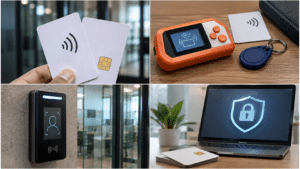

I have pulled apart more access-card readers than I can count. Banks and data-centre operators in Malaysia rarely ask me which brand to buy. Instead, they ask which of their cards still deserves to be trusted. That question usually comes down to one card: a MIFARE card, a contactless smart card that runs at 13.56 MHz. It is also the most common access credential in Malaysia today. However, not every MIFARE card belongs on a regulated door in 2026, and neither does every reader.
Key takeaways
- Most access cards issued in Malaysia today are MIFARE Classic, but their cipher is a 1990s design, so a bank or data-centre door should treat it as a weak link, not a safe default.
- Three credential tiers sit side by side on most sites: 125 kHz proximity, MIFARE Classic, and MIFARE DESFire or Plus. Only the last tier carries real AES or 3DES encryption, so it is the one worth standardising on.
- The card you buy is rarely the cost that matters. Reissues, audits and admin time usually add up to more than the credential itself, so budget for the process, not just the plastic.
- Johor Bahru alone has 2,700 MW of data-centre capacity already in its pipeline, on top of 850 MW built. More buildings means more doors, so a credential review gets harder to postpone every year.
- Face recognition does not replace every card at once. The practical pattern is a handoff: keep the card on low-risk doors, and add a face terminal only where an auditor actually asks who entered.
MIFARE Card Types in Malaysia
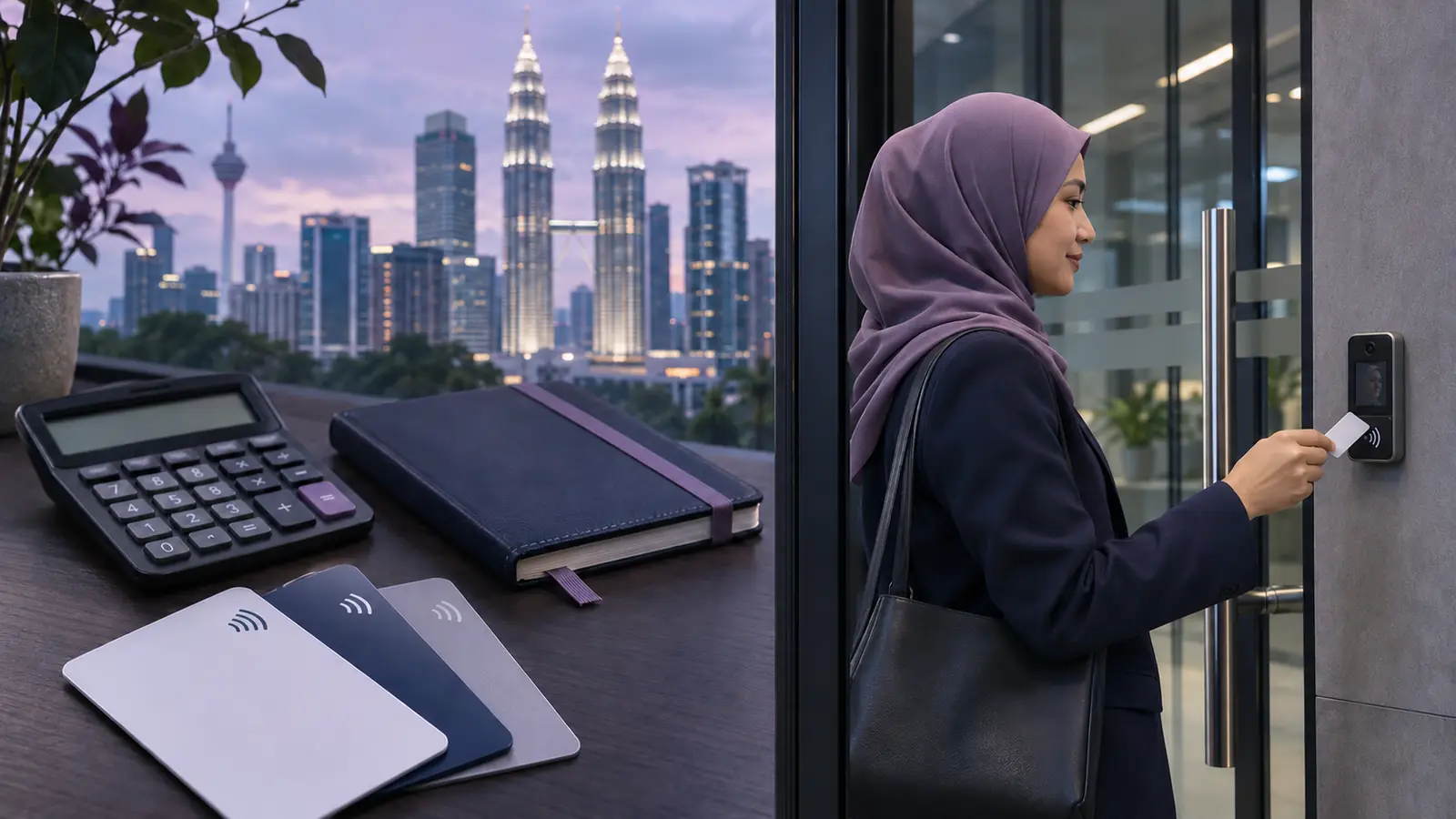
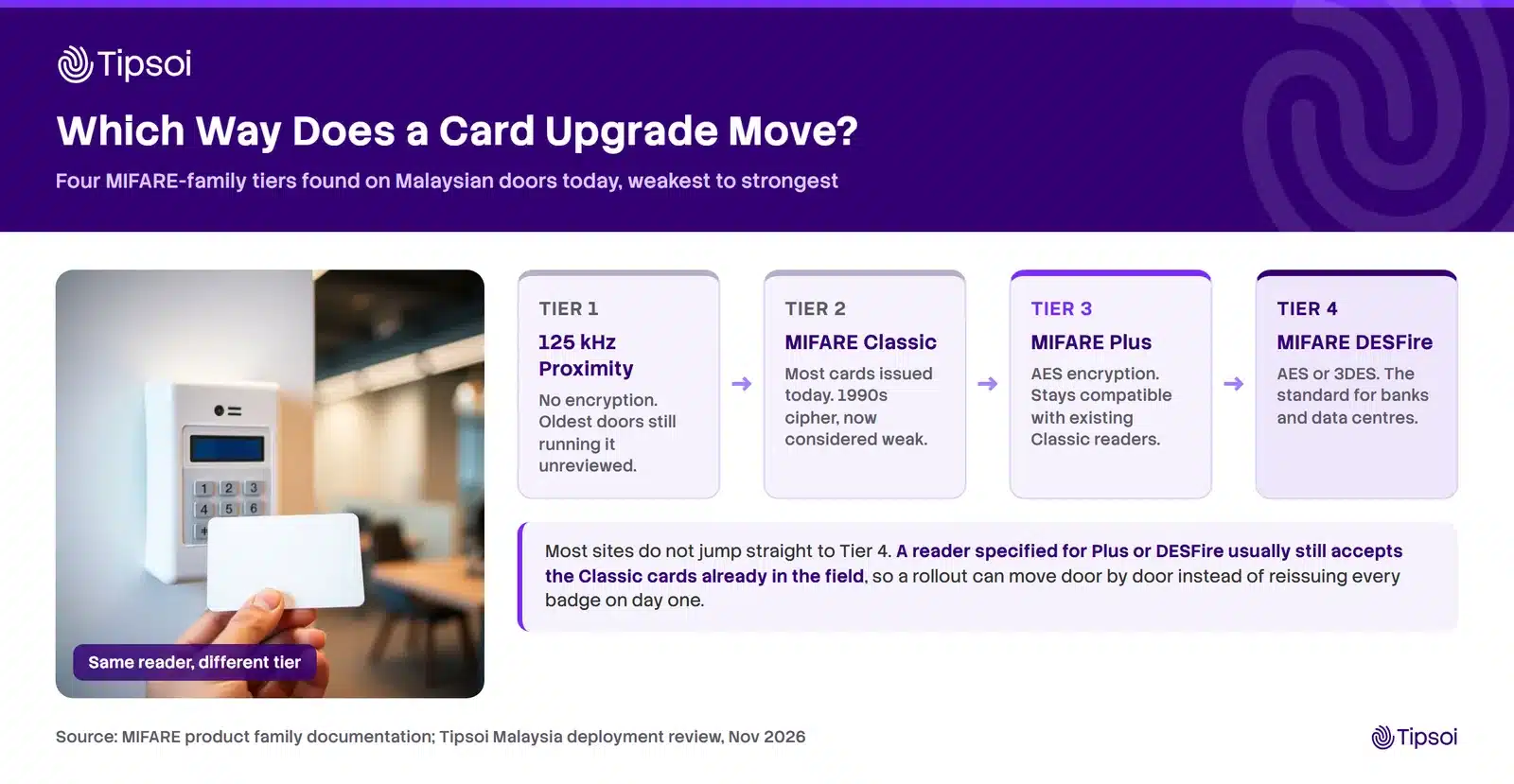
Walk into most Malaysian offices, banks or data centres today. You will find at least two generations of card running at once, often three. That is not an accident. Cards get issued in batches. Doors get retrofitted one at a time, and nobody wants to reissue a thousand badges on the same day. As a result, the weakest MIFARE card still in circulation sets the real security level, whatever the newest reader can do.
An access card is a credential used to open a door. Both 125 kHz proximity cards and 13.56 MHz MIFARE cards use RFID, so check which card technology each door accepts.
| MIFARE type | Memory | Encryption | Typical use in Malaysia |
|---|---|---|---|
| MIFARE Classic | 1K or 4K | Crypto-1, a 1990s cipher now considered weak | Most access cards issued today |
| MIFARE Ultralight | Minimal | None or basic | Disposable visitor passes, one-trip transit tickets |
| MIFARE Plus | Up to 4K | AES, stays compatible with Classic readers | Upgrading an existing Classic rollout in stages |
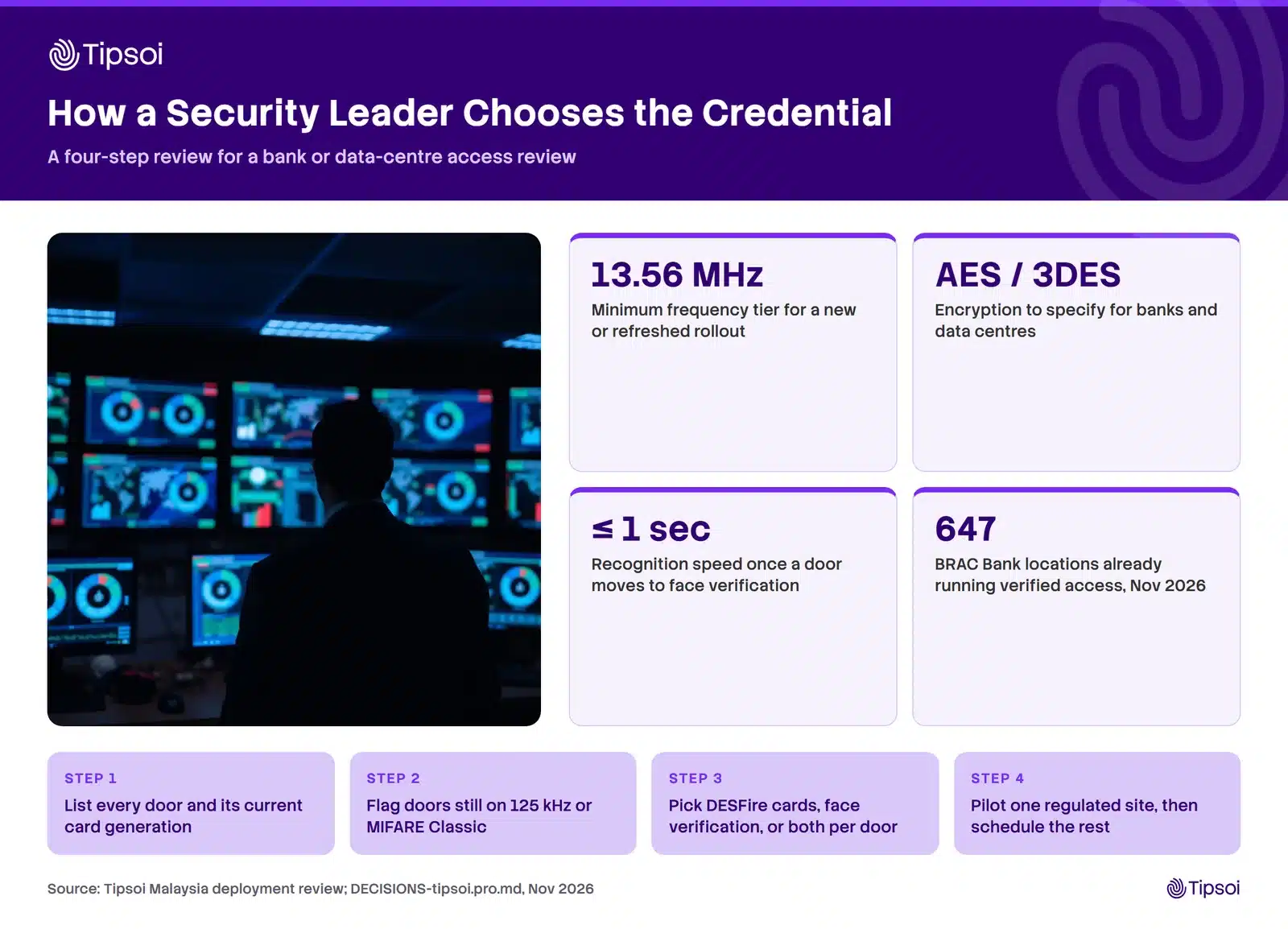
| MIFARE DESFire | Multi-application | AES or 3DES hardware encryption | Banks, data centres and large campuses |
You usually cannot tell these tiers apart by looking at the card. A 125 kHz proximity card and a MIFARE card are often the same size and the same plastic. Sometimes they even carry the same printed design, because the same badge printer handles both. So the only reliable way to know what is in circulation is to read the chip, not the card face. That chip, on a MIFARE card, follows the ISO/IEC 14443-A standard at 13.56 MHz. That is why a site audit starts at the reader logs, not the badge drawer.
MIFARE Card System Running Costs
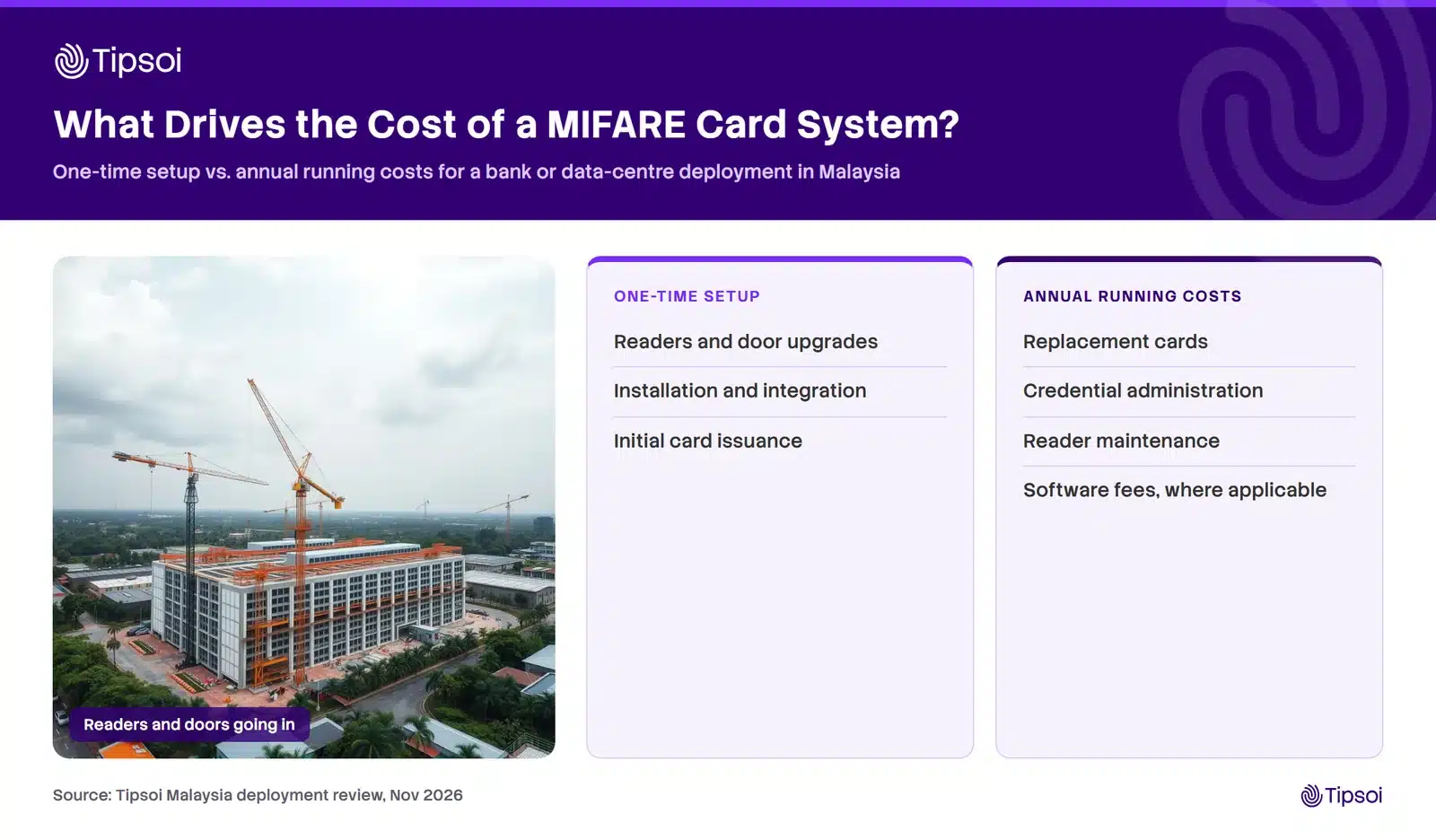
A MIFARE card itself is the smallest line in the budget. That is exactly why it gets picked first and reviewed last. However, the real running cost shows up later. It shows up in how often cards go missing. It also shows up in how long admin staff take to reissue one. Then it shows up again in audit time, proving who held which card on a given date.
Malaysia’s data-centre market is a useful reminder of why this adds up fast.
JLL figures reported via The Edge Malaysia cover the whole country. They put total data-centre capacity on track to reach 2,055 MW by the end of 2026.
That capacity has been growing at roughly 70% a year since 2020. Few security teams had budgeted a credential review around that pace before 2026.
In Johor Bahru alone, 850 MW of data-centre capacity is already built, as of the 2026 count.
A further 1,800 MW is under construction in 2026.
Behind that sits 2,700 MW more in the pipeline, the part of the 2026 count still to come.
Every one of those megawatts sits behind doors eventually. So every door needs a credential decision. That decision is not a one-time event at launch. It repeats every time a card is lost, a contractor leaves, or an auditor asks for proof.
What Drives the Running Costs of a MIFARE Card System?
Four things drive the real cost of running a card program at a bank or data centre. Here they are, roughly in the order they bite.
- Reader and controller cost per door. This is fixed once and rarely revisited.
- Lost or unreturned card replacement rate. It climbs every year a site skips an audit of old badges.
- Staff time per reissue. HR or facilities usually absorbs this, not security, so it rarely appears on a security budget line.
- Audit time: the hours a compliance team spends matching a card number back to the person who actually used it.
Picture a site with 400 staff and a 15% annual card turnover from joiners, leavers and lost badges. That works out to 60 reissues a year. Each one needs a form, an approval, and five to ten minutes of admin time. So that adds up to several working days a year, before anyone spends a ringgit on a new reader. A device quote never shows this. The next audit always does.
Not sure what your own sites are running?
A 15-minute call with Tipsoi’s Malaysia team can map every door. It flags the weak tiers and shows where a face terminal pays for itself fastest.
Can Cards Verify Who Entered?
Not on its own. A reader checks a number, not a face. That single fact explains most of the “can I clone a MIFARE card” searches a security team sees in its own logs. The real worry is rarely the MIFARE card technology itself. A card can be shared. It can be handed down between shifts. It can be carried by someone other than the person it was issued to, and the reader has no way to know. Tipsoi covers the technical side of card cloning risk in a dedicated piece on duplicate access card risk in Malaysia. This article stays on a different question: which credential a site should run in the first place.
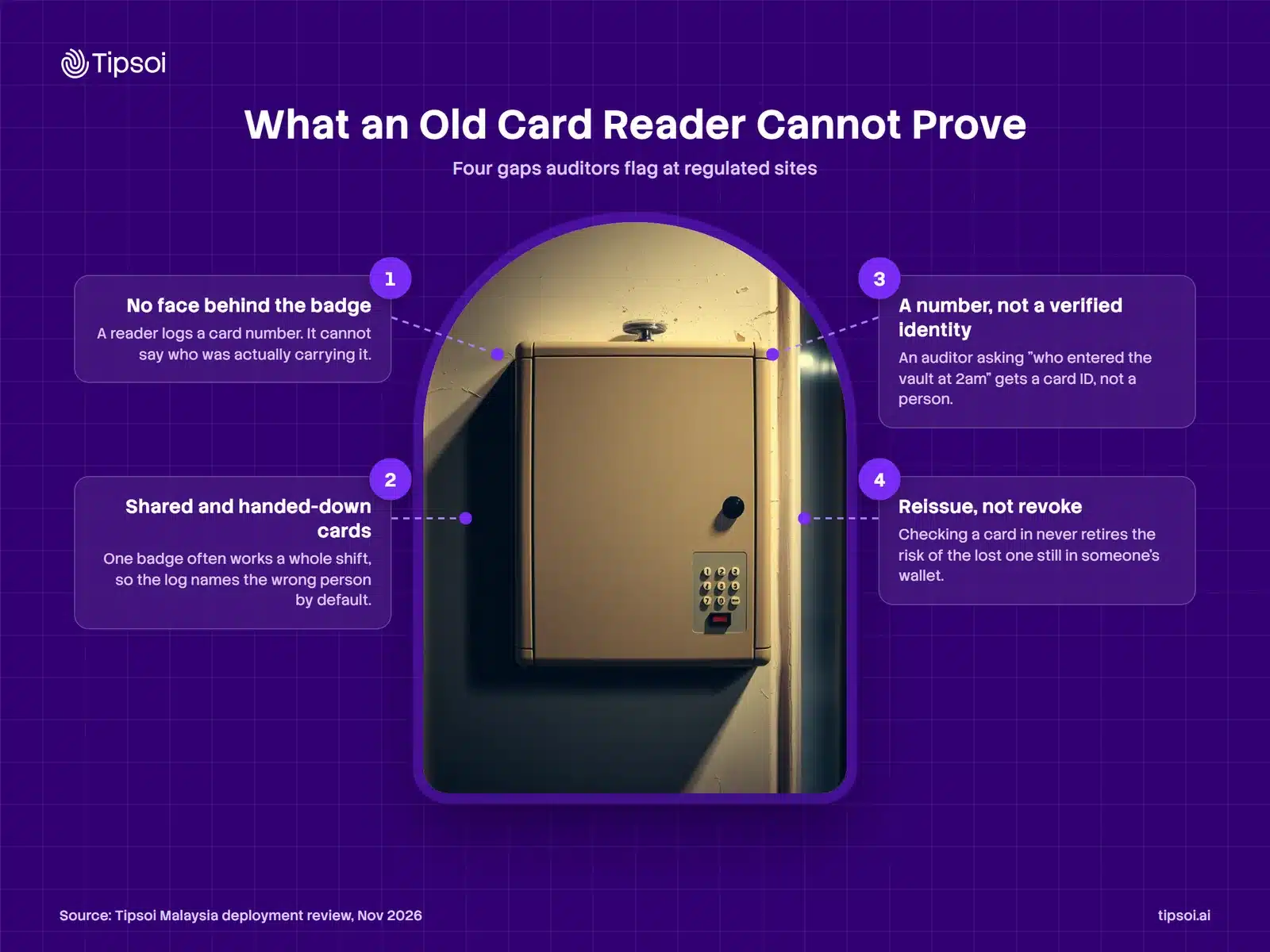
A plain card-and-reader setup cannot do four things that matter to an auditor.
- No face behind the badge: a reader logs a card number, not who was actually carrying it.
- Shared and handed-down cards: one badge often works a whole shift, so the log names the wrong person by default.
- A number, not a verified identity: an auditor asking who entered at 2am gets a card ID, not a person.
- Reissue, not revoke: checking a card back in never retires the risk of the lost one still in someone’s wallet.
Malaysia’s Personal Data Protection Act treats a card number or a face template as personal data once it can identify an employee. That is why the Personal Data Protection Department expects a documented basis for collecting and keeping either one. A card number carries less sensitivity than a face template. That is one more reason many sites don’t move every door to face verification at once.
Which Doors Need Face Verification?
Most sites do not replace every MIFARE card at once, and they should not. Instead, the honest pattern across regulated deployments is a handoff. Cards stay on low-risk doors. Meanwhile, the doors an auditor actually asks about move to face verification first, usually alongside the card rather than instead of it.
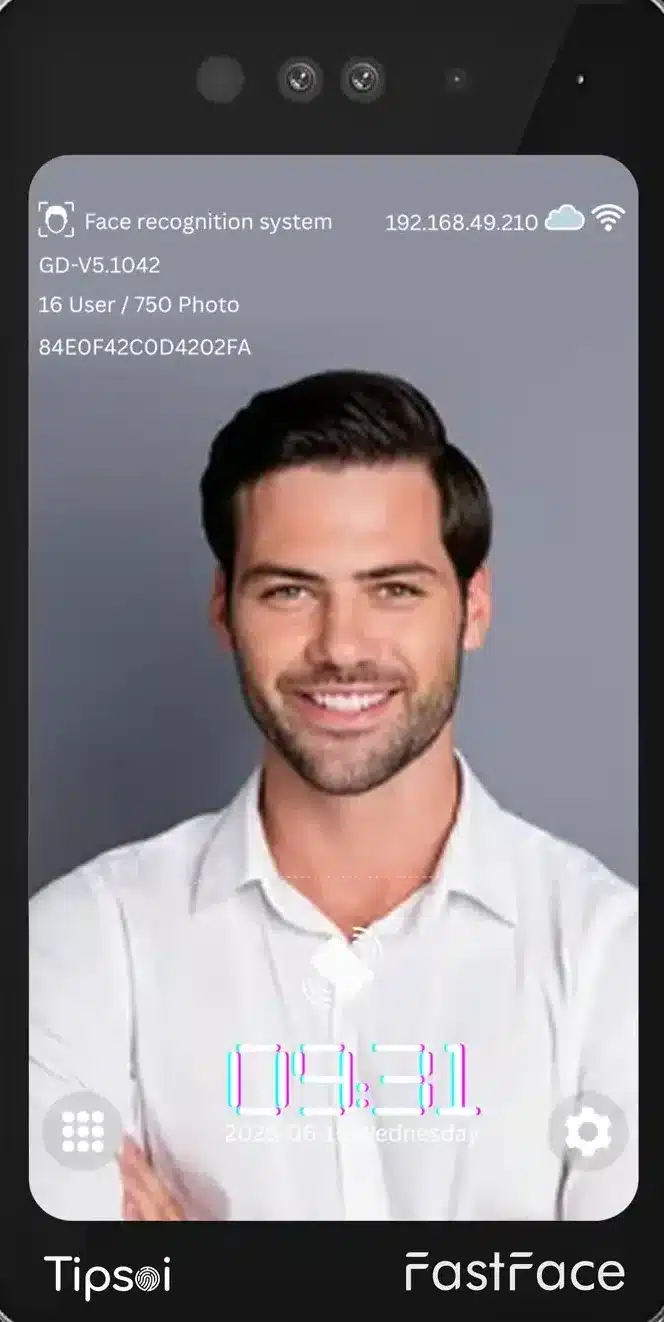
It reads a face in under a second. It still accepts a standard MIFARE card at the same reader, so a door never has to drop one credential to add the other.
- Face and card capacity: 100,000 each, with a 200,000-event local log.
- Recognition accuracy: 99.77% at a 1% false-accept rate in the manufacturer’s own test conditions.
- Built IP65, CE and FCC certified, for an entrance with no climate control.
Two Large-Scale Access Control Deployments in Malaysia
Two deployments show what this handoff looks like once it is running at scale, not just planned. At one data centre, IFIC Bank runs HID and Tipsoi readers side by side on a single access platform. So one dashboard shows every door. An auditor no longer has to reconcile two separate systems by hand.
At BRAC Bank, the same approach has reached 843 devices across 647 locations as of November 2026. It is still growing. That is the clearest sign this is not a pilot anyone plans to undo.
The FastFace 8 FTC terminal sits behind both deployments. It shares its recognition engine and hardware core with the base FastFace 8 terminal. That base model’s 2026 datasheet lists a 99.77% recognition accuracy at a 1% false-accept rate. That is the figure worth asking any vendor to match, before signing off a face-recognition door.
The honest trigger for moving a door from card to face is rarely “the card got old.” It is usually one of three things.
- An auditor or regulator starts asking who entered, not just which badge was used.
- Cards are confirmed shared or handed down at shift change, which a card system alone cannot stop.
- The site already budgets a reception or lobby face terminal, so extending it to one more door costs far less than a first installation.
Choosing Cards and Face Verification
A short audit, not a procurement exercise, is how a CTO, Head of Security or Head of Compliance should review a Malaysian site’s credentials. Start with a list of what sits on each door today. Then flag anything still on a weak tier. Then decide, door by door, whether a stronger MIFARE card, face verification, or both is the right fix.
Access Card Technology Checklist
A one-page PDF built from Tipsoi’s own deployment reviews. It covers the card families at a glance. It also covers the cost questions worth asking before a renewal, and the signs it is time to add a face terminal to a door.
Frequently Asked Questions
Is MIFARE RFID or NFC?
A MIFARE card is a family of RFID cards. It operates at 13.56 MHz under the ISO/IEC 14443-A standard. NFC devices often use that same radio layer, which is why the two get confused. A MIFARE access card and an NFC phone can often talk to the same reader. But MIFARE itself is the card technology, not the phone standard.
What is the difference between a MIFARE card and a proximity card?
A 125 kHz proximity card is older and lower-frequency, with no onboard encryption. A MIFARE card runs at 13.56 MHz, so depending on the model, it can carry real encryption. Still, most Malaysian sites that use a 125 kHz proximity card are running it on a legacy door. That door has not been reviewed in years.
How much does a MIFARE card cost?
The MIFARE card itself is the cheapest part of the program. Instead, the cost that actually shows up in a budget is reissuance, admin time and audit effort. That is why this article treats “what it costs to run” as a bigger question than the unit price of one card.
Can I clone a MIFARE card?
This article does not explain how, and will not. What matters for a security leader is simpler. A plain card number cannot prove who was carrying it. That is the gap face verification closes. For the cloning risk itself, Tipsoi’s guide to duplicate access card risk in Malaysia covers it.
Does Tipsoi’s FastFace 8 FTC still accept a MIFARE card?
Yes. It reads a standard MIFARE card at 13.56 MHz, at the same reader that also runs face verification. It holds capacity for 100,000 faces and 100,000 cards. So a site can run both credentials on the same door during a phased rollout.
When should a data centre in Malaysia move a door to face recognition?
The clearest trigger is an audit or compliance review. It asks for proof of who entered a specific room, not just which card was used. Also, shared or handed-down cards, and a growing lost-card rate, are the other two signs worth tracking door by door.
Is an access card or a door access card reader regulated under Malaysia’s PDPA?
A card number and any face data a reader creates both count as personal data, once they can identify an employee. So that brings them under Malaysia’s Personal Data Protection Act. Also, the Act treats a face template as more sensitive than a card number. So sites typically document a clear basis for keeping either one.
What should replace an old 125 kHz proximity card?
For most doors, a MIFARE DESFire or Plus card is the straightforward upgrade. Its AES or 3DES encryption keeps the same badge workflow staff already know. However, for specific doors, such as a vault, a server hall or a change room, face verification is the stronger move. These are the doors an auditor already asks about. Then the card stays only as a fallback.
Next step
Johor Bahru alone has 2,700 MW more of data-centre capacity already in its pipeline. BRAC Bank already runs verified access across 843 devices and 647 locations as of November 2026. So the question for most Malaysian security leaders is no longer whether to review their credentials. It is which door to start with.
Tipsoi is part of Inovace Technologies Ltd, ISO 9001:2015 and ISO/IEC 27001:2022 certified. See how the full access-control line fits a Malaysian site on the Tipsoi Malaysia hub.